
 Plans the work · Warns early
The right task. The right person. The right week.
Every plan is a promise, and most of them are broken by Wednesday. Not because people are lazy, but because nobody really knew who was free, who was on leave next week, or how long this kind of task really takes this person. Dono knows: who is busy, who is free, and who is best at this kind of work. She plans on everyone's real capacity and real pace, and she gets sharper every month, because she checks herself against what actually happened.
Screens show an invented demo company.
Dono plans
She knows who is really free, and when the work will really land.
"Who can take this?"
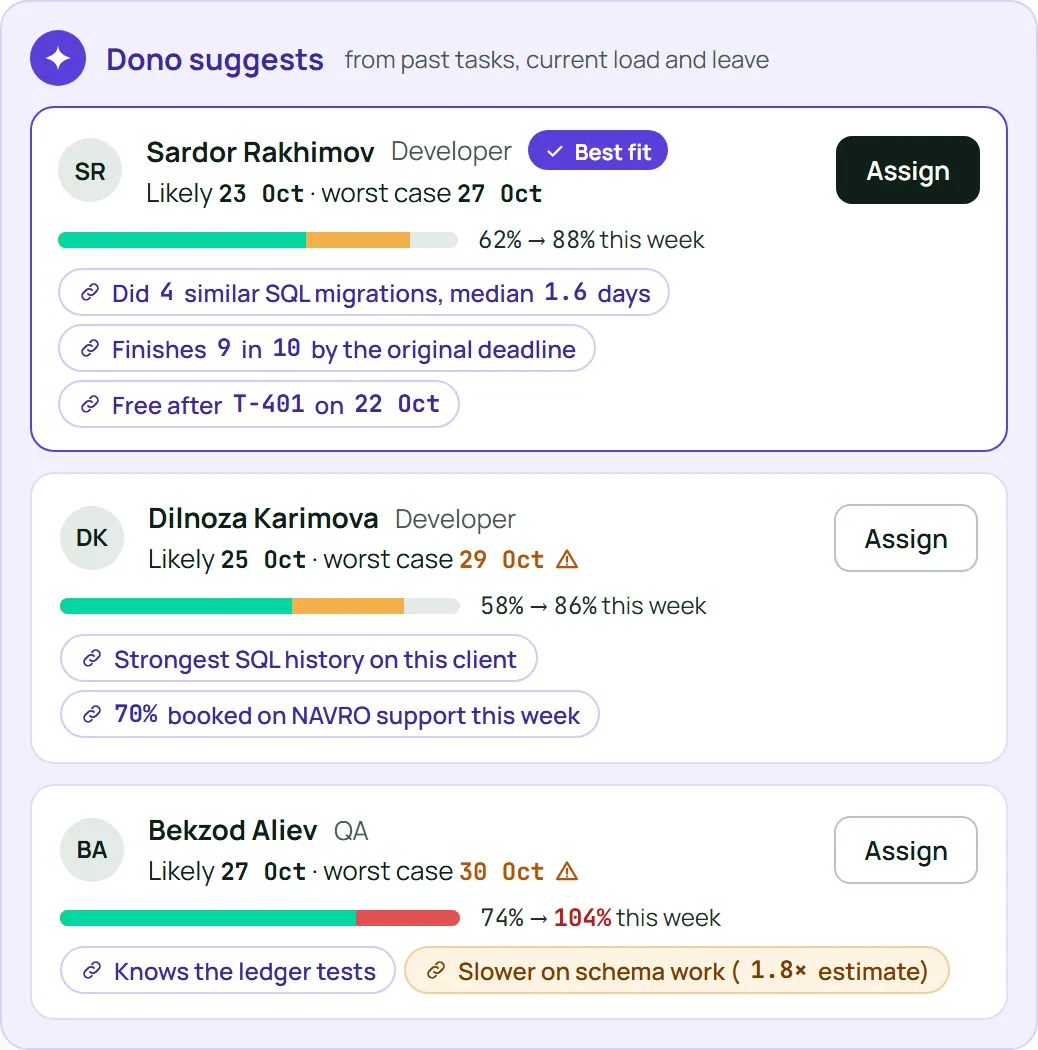
Name the task and she suggests three people. For each: a likely finish date and a worst case, their load this week before and after, and the reasons. "Did four tasks like this before." "On leave 21 to 23 October." "Booked on another project most of the week." You press Assign.
The right person, on the right task, at the right time.
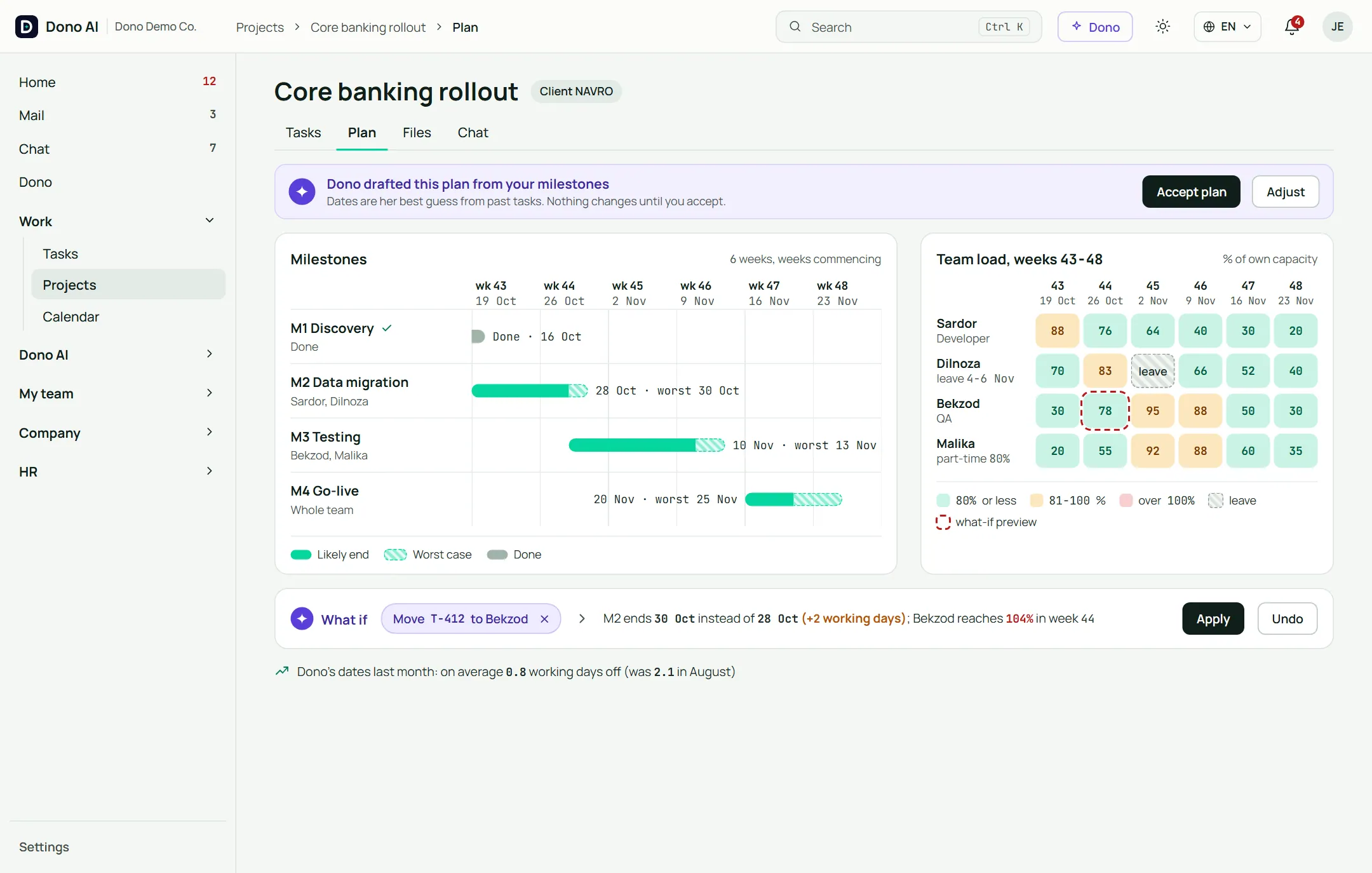
She knows who is busy, who is free and who has done this kind of work best: each person's working pattern, part-time share, public holidays, approved leave, their other projects, and how fast they actually deliver work like this.
Plan the whole project before you assign a single person.
From your milestones, or from the contract she just read, she drafts a balanced plan for every task, shows everyone's load across all their projects, and tells you the start date that removes the overload.
Start the project. The plan becomes the baseline.
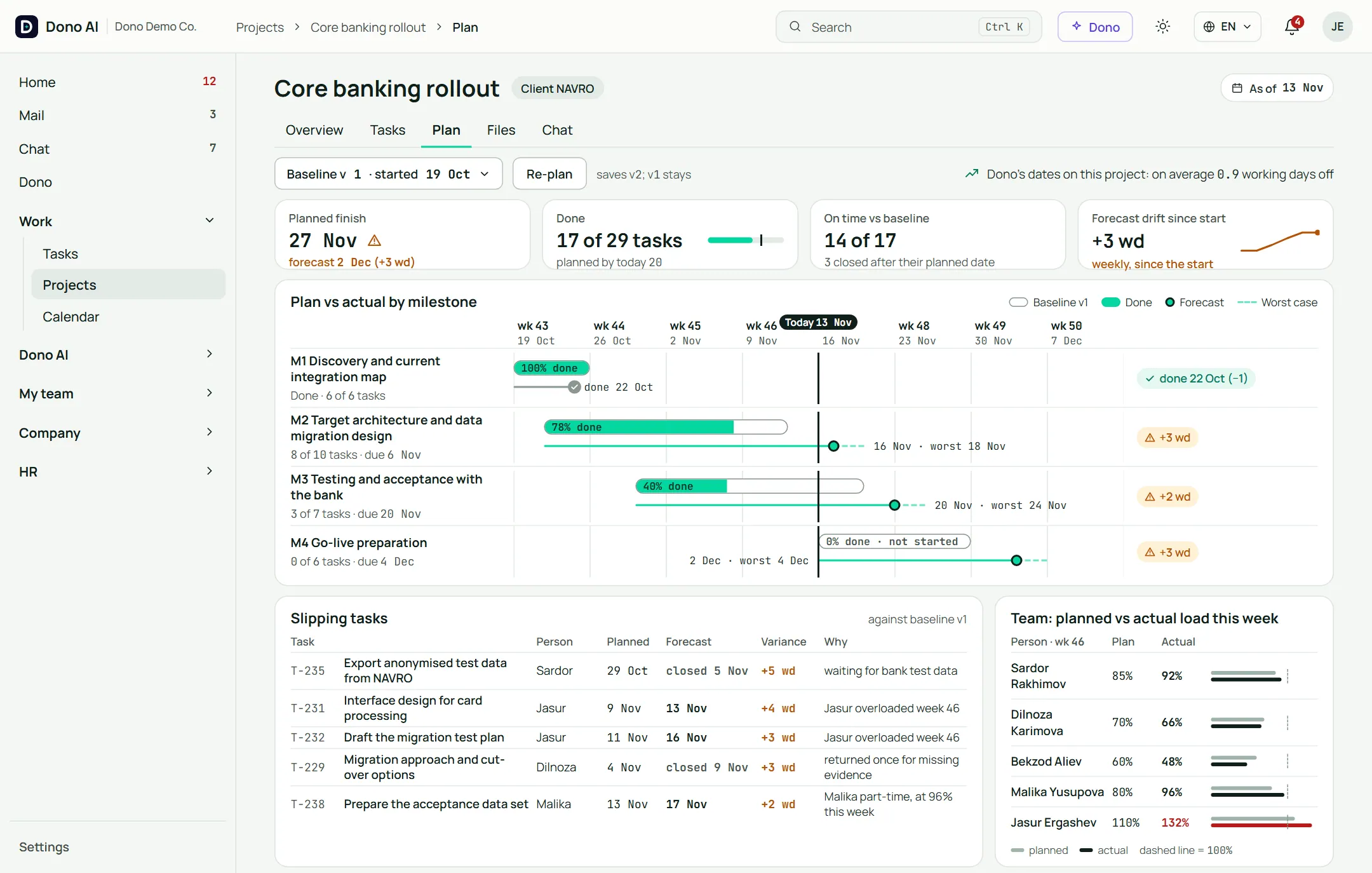
From that day: plan against actual against forecast, for every milestone. The tasks that are slipping, and why: returned for rework, overloaded, blocked, started late.
What if?
Move a task to someone else, move a date, add a person. She recomputes and tells you what moves.
Re-plan without losing the truth.
Every earlier baseline stays, so you always know what was promised.
She gets sharper every month, and she shows it.
Every date she proposes is checked against what really happened. Her track record is right there on the plan, and her next dates are corrected by it.
The moment that sells it
"Who can take this?" Three faces, three dates, three load bars, and the reasons in plain words. Assign.
She never assigns by herself. She proposes, you press, and she learns from what really happens.
Dono keeps managers ahead
She tells you on Monday what will slip on Friday.
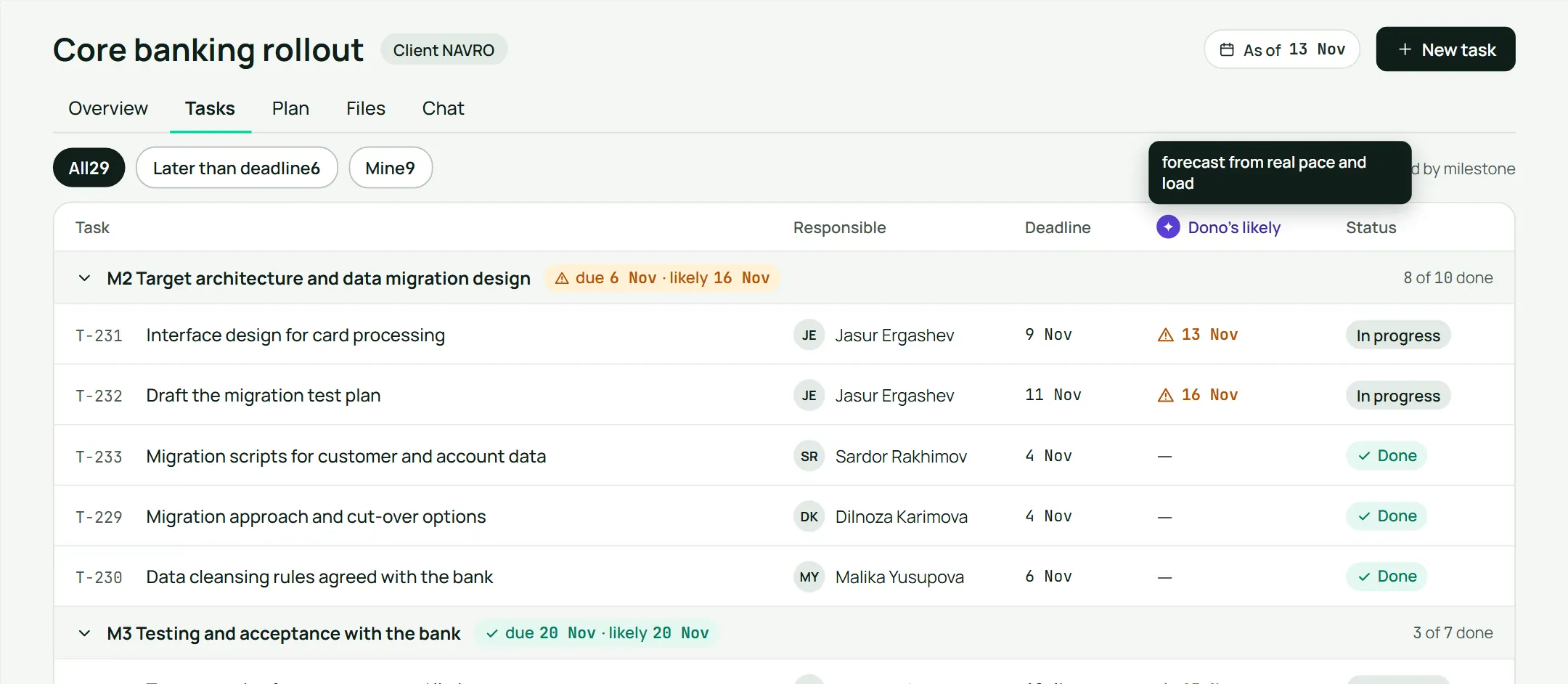
A forecast next to every deadline.
You see when work will really land, not just when it is due.
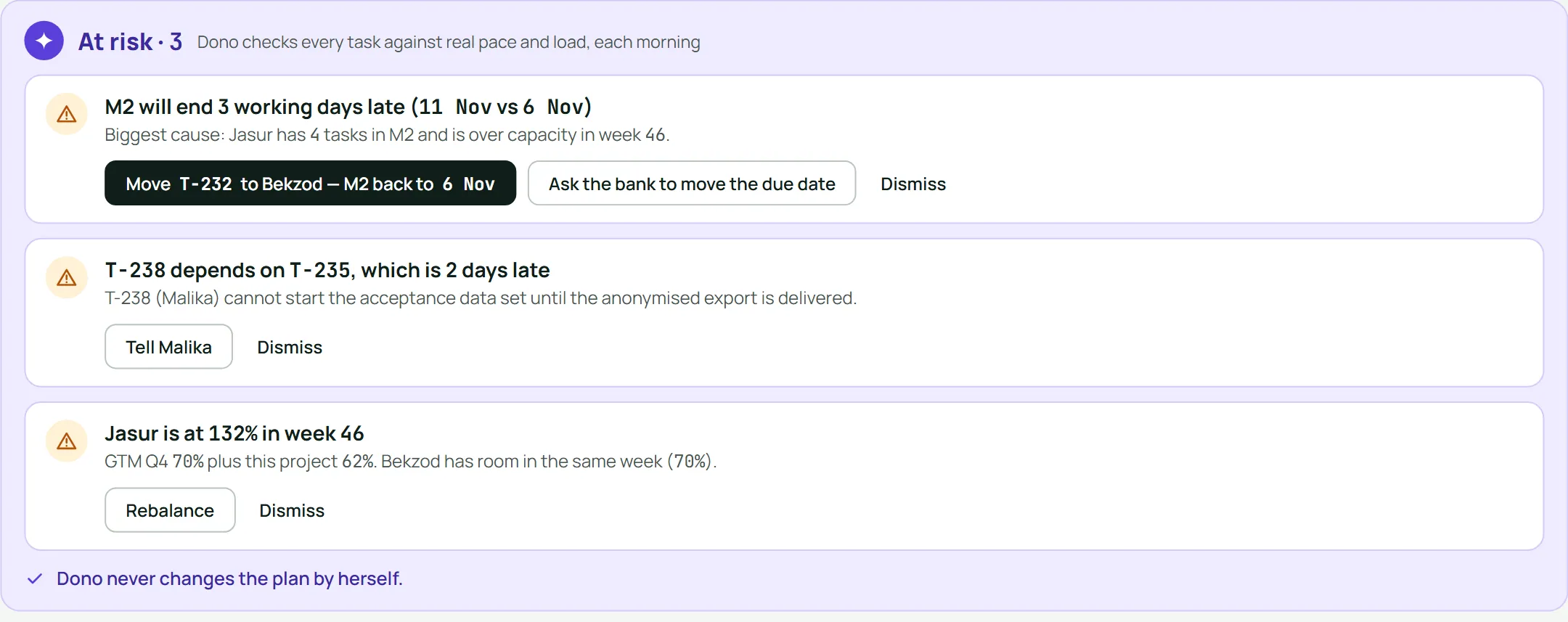
The At-risk card.
The milestone that will slip, why, and the one-click fixes: reassign to someone who can still make it, ask for an extension early, warn the person waiting on it.
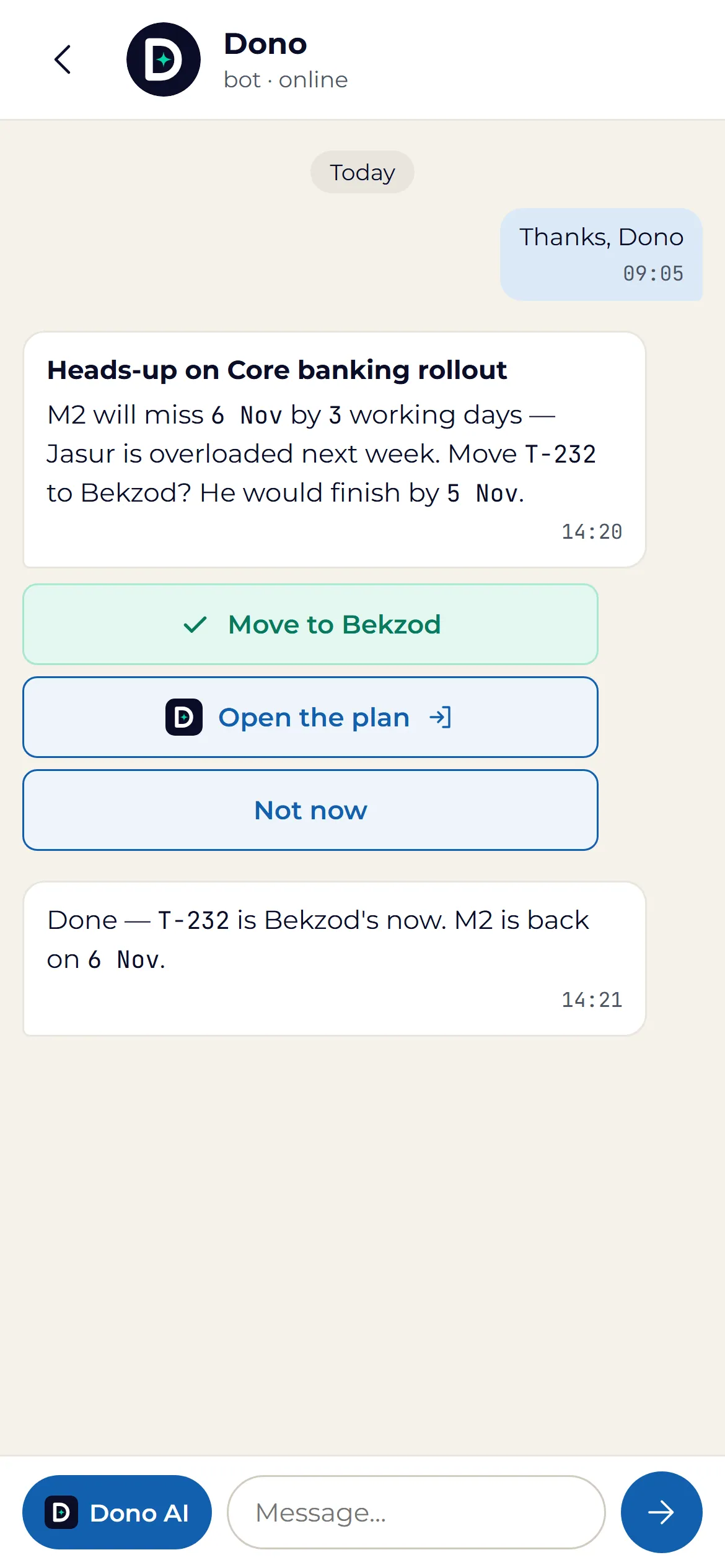
An early warning in Telegram.
The project lead hears it first, with a one-tap fix.
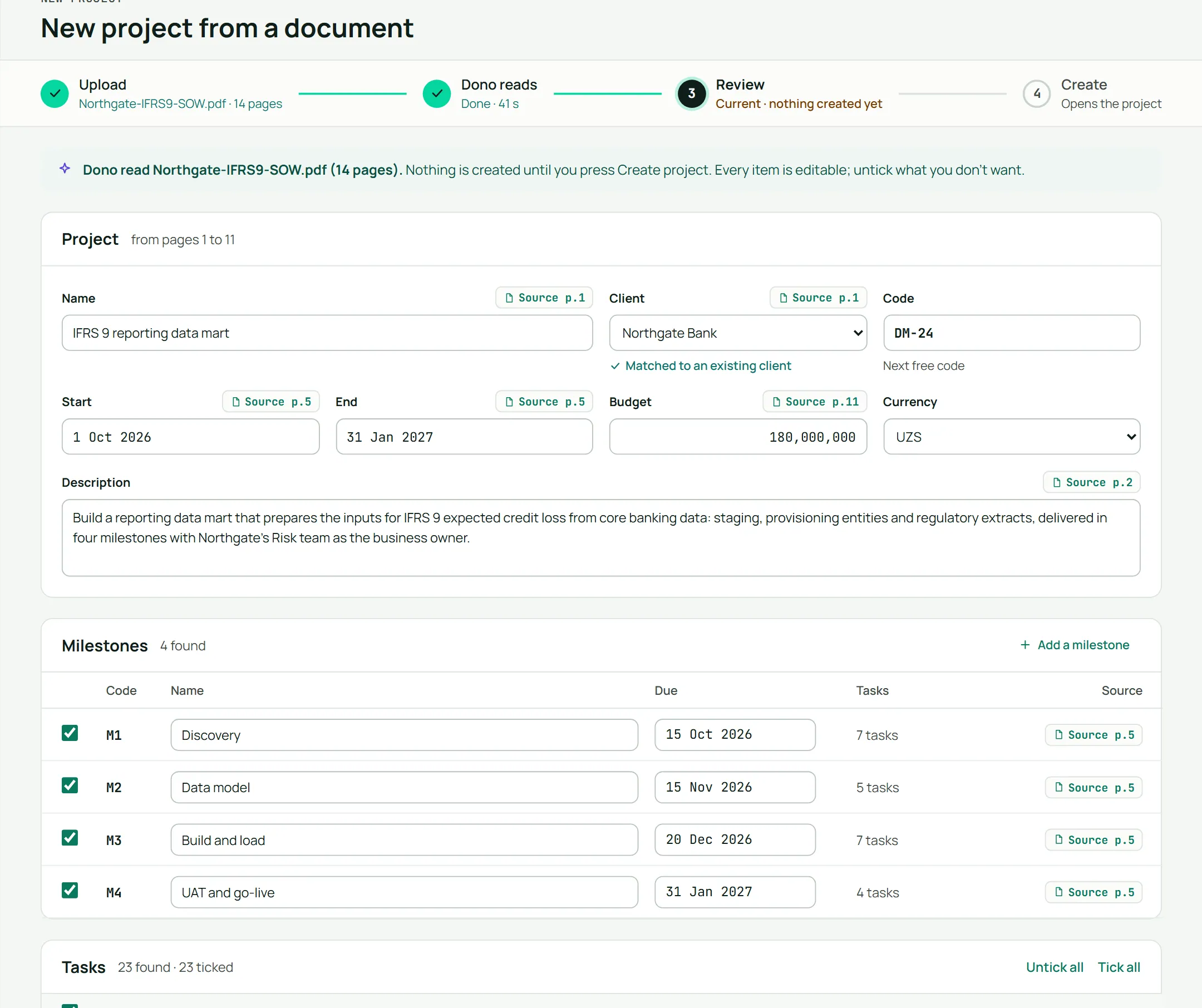
Give her a contract. Get a project.
Parties, rates, milestones, the purpose, the goals with their quotes from the contract, the scope, the team and the tasks. Proposed for you to review. Nothing is created until you apply.
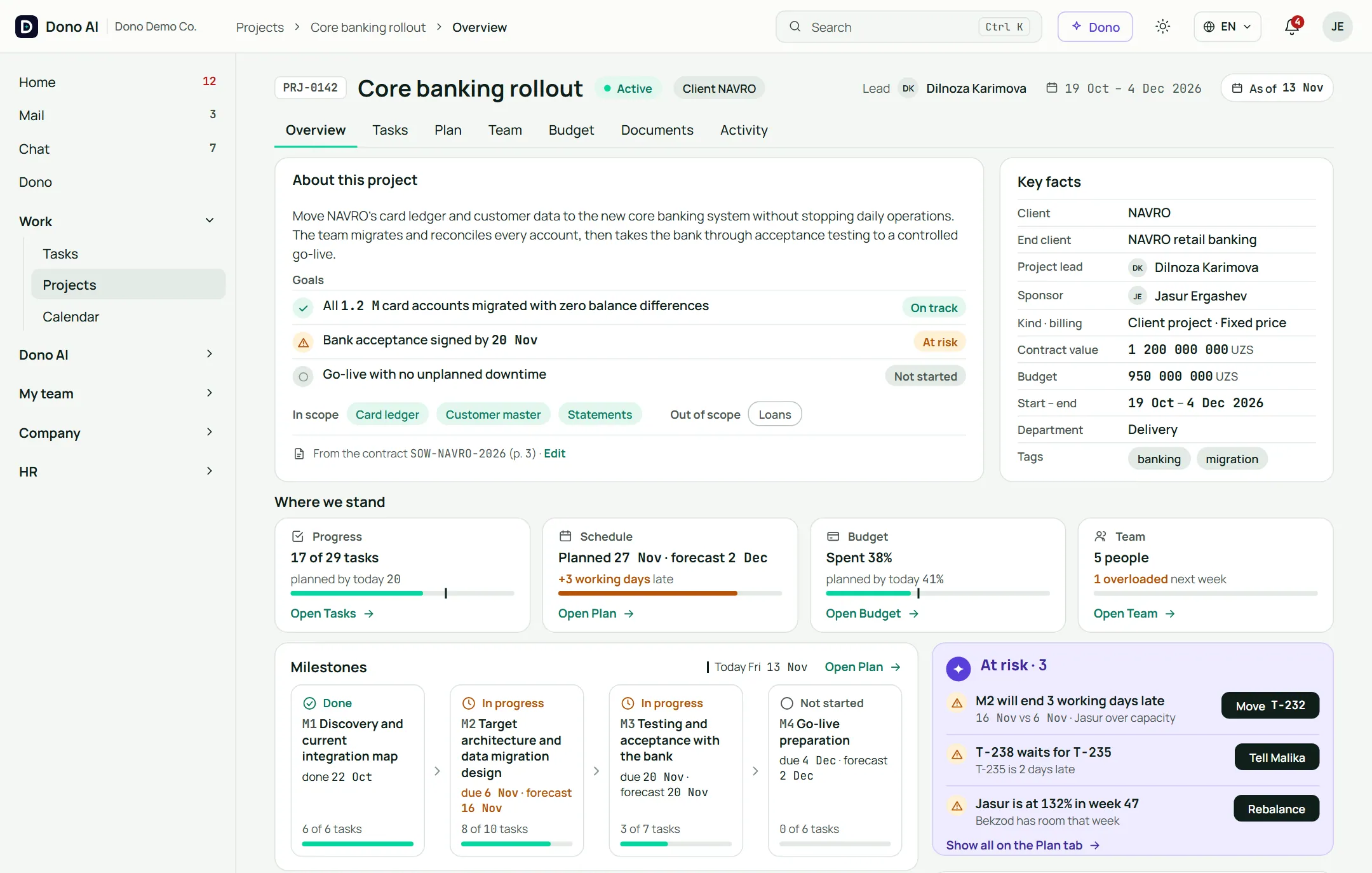
The project home tells the truth.
Goals with their status, where you stand against the baseline, who is on the team and how much of them. Budget and contract value visible only to the lead, the sponsor and admins.
Work comes back with proof.
Tasks carry evidence and a verification step. The person who did the work cannot be the one who signs it off.
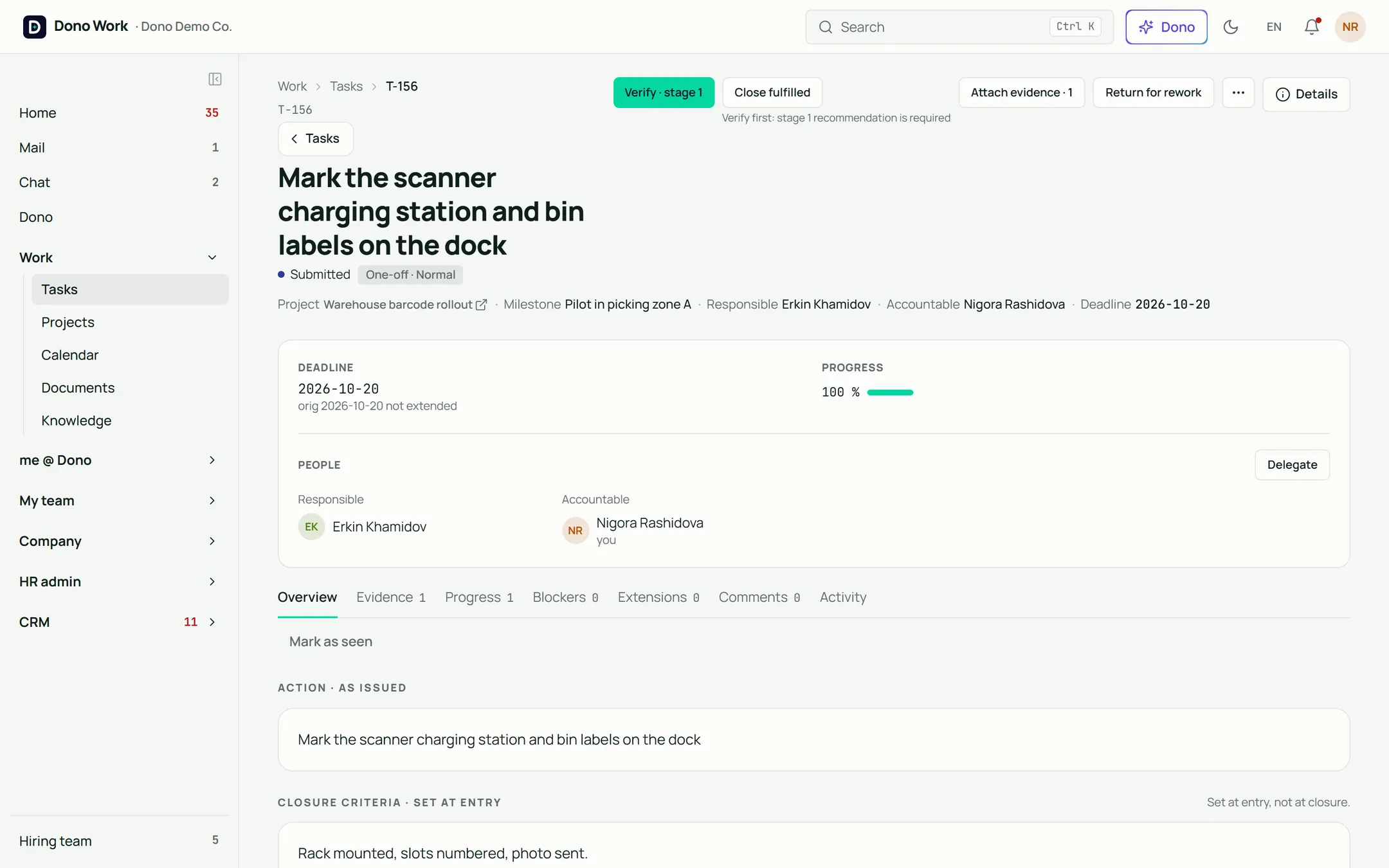
Overdue work climbs the ladder on its own.
From the person doing it, to the one who answers for it, to their manager, to you.
Every decision on the record.
Return, extend, close partial, reopen: each with a written reason.
My week, for everyone.
What fits this week, what is at risk, who is waiting on you. Ask for the extension before it is late, not after.
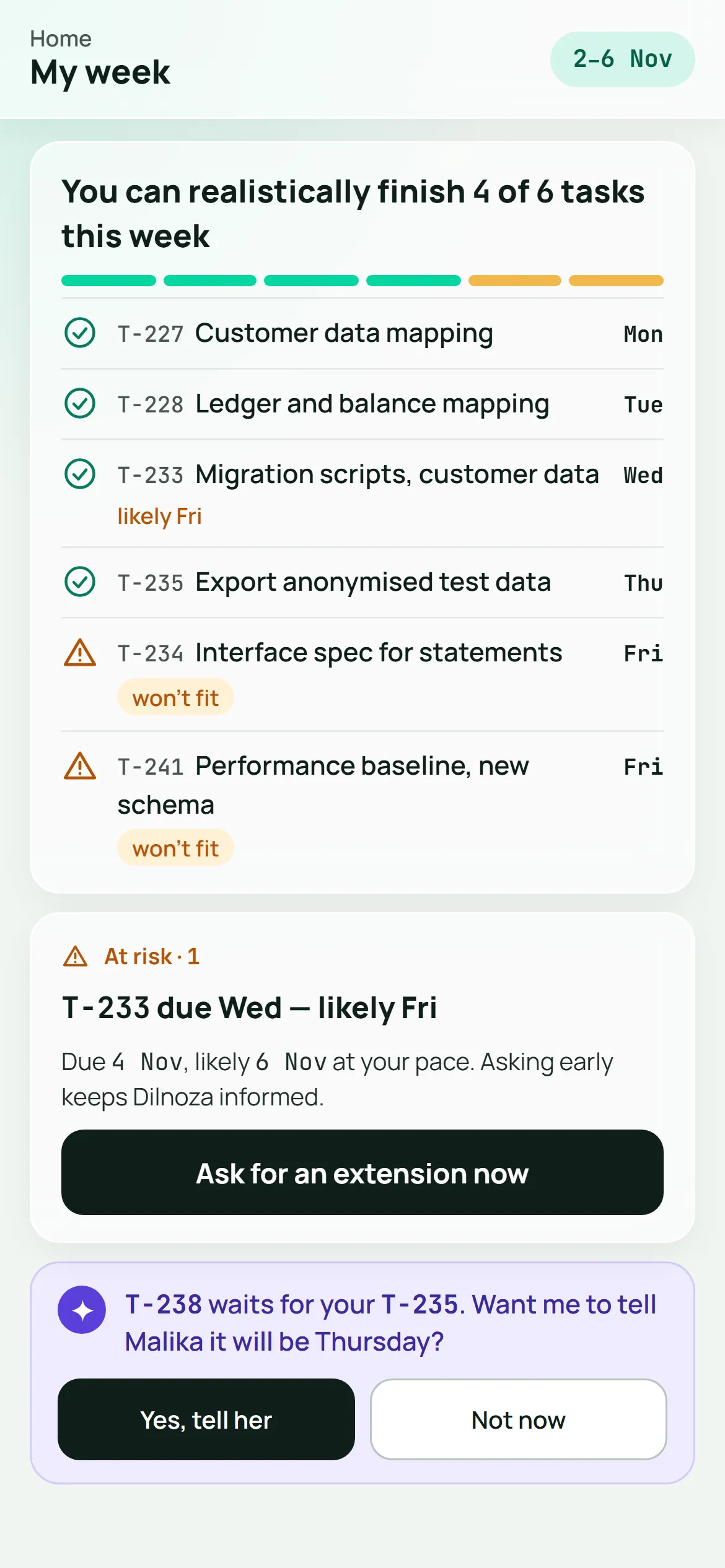
The moment that sells it
The At-risk card: "Milestone 2 will end three working days late. Biggest cause: one person holds four of its tasks and is over capacity that week." One click: reassigned. The forecast turns green.
No surprises on Friday.


Meet Dono today.
Try her yourself in the live demo: an invented company, seven roles, nothing to install. Or book thirty minutes with us and bring a job description and a contract. Watch her hire and plan.